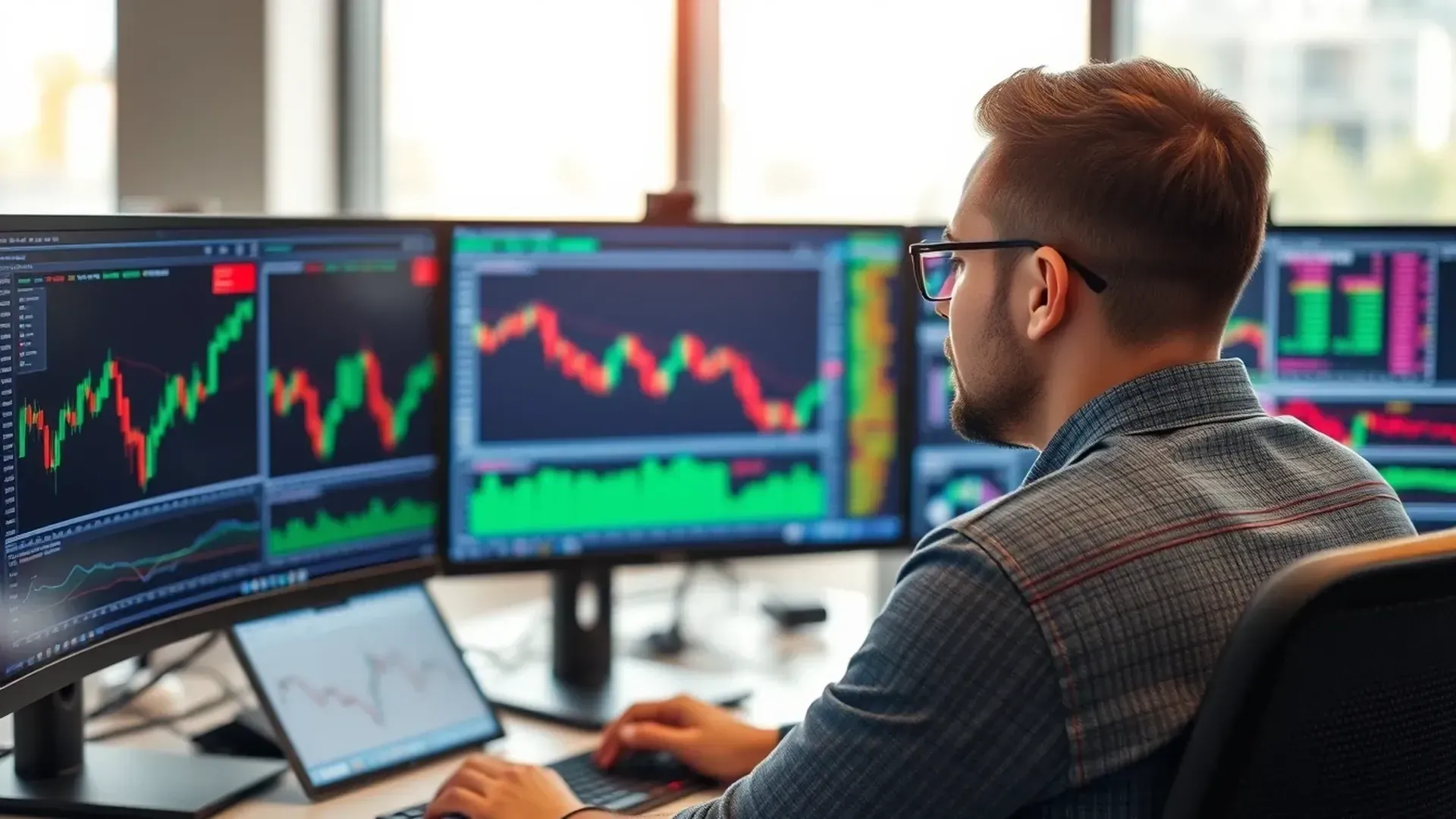
The key indicators for predicting forex trends are essential tools used by traders to analyze and forecast future movements in the foreign exchange market. These indicators provide valuable insights into market conditions, helping traders make informed decisions and identify potential trading opportunities. By examining various factors such as price patterns, economic data, and market sentiment, these indicators assist in predicting the direction and strength of forex trends.
Understanding the Importance of Technical Analysis in Predicting Forex Trends
When it comes to predicting forex trends, there are several key indicators that traders use to make informed decisions. These indicators are part of technical analysis, which is a method of analyzing historical price data to identify patterns and trends. Technical analysis is widely used in the forex market because it helps traders anticipate future price movements and make profitable trades.
One of the most commonly used indicators in technical analysis is moving averages. Moving averages are calculated by taking the average price of a currency pair over a specific period of time. Traders use moving averages to identify the overall direction of a trend. For example, if the price of a currency pair is consistently above its 50-day moving average, it is considered to be in an uptrend. On the other hand, if the price is consistently below its 50-day moving average, it is considered to be in a downtrend.
Another important indicator for predicting forex trends is the relative strength index (RSI). The RSI is a momentum oscillator that measures the speed and change of price movements. It ranges from 0 to 100 and is typically used to identify overbought and oversold conditions. When the RSI is above 70, it indicates that a currency pair may be overbought and due for a correction. Conversely, when the RSI is below 30, it suggests that a currency pair may be oversold and due for a bounce back.
In addition to moving averages and the RSI, traders also use other indicators such as the MACD (Moving Average Convergence Divergence) and the Bollinger Bands. The MACD is a trend-following momentum indicator that shows the relationship between two moving averages of a currency pair’s price. It consists of a MACD line, a signal line, and a histogram. Traders look for crossovers between the MACD line and the signal line to identify potential buy or sell signals.
On the other hand, Bollinger Bands are volatility indicators that consist of a middle band, an upper band, and a lower band. The middle band is typically a simple moving average, while the upper and lower bands are calculated based on the standard deviation of price movements. Traders use Bollinger Bands to identify periods of high and low volatility. When the price of a currency pair is touching the upper band, it suggests that it may be overbought. Conversely, when the price is touching the lower band, it suggests that it may be oversold.
While these indicators are useful for predicting forex trends, it is important to note that they are not foolproof. The forex market is influenced by a wide range of factors, including economic data, geopolitical events, and market sentiment. Therefore, it is important for traders to use technical analysis in conjunction with other forms of analysis, such as fundamental analysis and sentiment analysis, to make well-informed trading decisions.
In conclusion, understanding the importance of technical analysis in predicting forex trends is crucial for traders. Moving averages, the RSI, the MACD, and Bollinger Bands are just a few of the key indicators that traders use to identify patterns and trends in the forex market. However, it is important to remember that these indicators are not guarantees of future price movements. Traders should use them as tools to supplement their overall trading strategy and consider other factors that may impact the forex market.
Exploring the Role of Economic Indicators in Forecasting Forex Trends
What Are the Key Indicators for Predicting Forex Trends?
When it comes to trading in the foreign exchange market, one of the most important skills to have is the ability to predict forex trends. Being able to anticipate whether a currency will rise or fall in value can make all the difference in making profitable trades. But how can one accurately predict these trends? The answer lies in understanding and analyzing economic indicators.
Economic indicators are statistics that provide valuable insights into the health and performance of a country’s economy. They can range from employment data and inflation rates to GDP growth and consumer spending. By examining these indicators, traders can gain a better understanding of the factors that influence currency values and make more informed decisions.
One key indicator that traders often look at is interest rates. Central banks play a crucial role in setting interest rates, and changes in these rates can have a significant impact on currency values. When a country’s interest rates rise, it becomes more attractive for foreign investors to hold that currency, leading to an increase in demand and a rise in its value. Conversely, when interest rates are lowered, the currency may depreciate as investors seek higher returns elsewhere.
Another important indicator is inflation. Inflation refers to the rate at which the general level of prices for goods and services is rising and, subsequently, the purchasing power of a currency is falling. High inflation can erode the value of a currency, making it less attractive to investors. Therefore, traders often keep a close eye on inflation rates to gauge the potential impact on currency values.
Unemployment rates are also closely monitored by forex traders. A high unemployment rate can indicate a weak economy, which may lead to a depreciation in the currency. On the other hand, a low unemployment rate suggests a strong economy, which can boost the value of the currency. By analyzing employment data, traders can gain insights into the overall health of an economy and make predictions about future currency trends.
Gross Domestic Product (GDP) is another crucial economic indicator. GDP measures the total value of all goods and services produced within a country over a specific period. A strong GDP growth rate is often associated with a robust economy, which can lead to an appreciation in the currency. Conversely, a decline in GDP growth may signal a weakening economy and a potential depreciation in the currency.
Consumer spending is yet another indicator that traders pay close attention to. Consumer spending is a key driver of economic growth, and changes in consumer behavior can have a significant impact on currency values. When consumers are confident and spending more, it can boost the economy and strengthen the currency. Conversely, a decrease in consumer spending can signal economic uncertainty and lead to a depreciation in the currency.
While these indicators are essential for predicting forex trends, it’s important to note that they are not foolproof. The forex market is influenced by a multitude of factors, including geopolitical events, market sentiment, and investor behavior. Therefore, it’s crucial for traders to consider a wide range of indicators and factors when making predictions.
In conclusion, economic indicators play a vital role in forecasting forex trends. By analyzing interest rates, inflation rates, unemployment rates, GDP growth, and consumer spending, traders can gain valuable insights into the health and performance of an economy. However, it’s important to remember that these indicators are just one piece of the puzzle. Successful forex trading requires a comprehensive understanding of the market and the ability to adapt to changing conditions.
The Impact of Sentiment Analysis on Predicting Forex Trends
When it comes to predicting forex trends, there are several key indicators that traders use to make informed decisions. One of these indicators is sentiment analysis, which involves analyzing the emotions and opinions of market participants to gauge the overall market sentiment.
Sentiment analysis is based on the idea that market sentiment can have a significant impact on forex trends. If the majority of traders are feeling positive about a particular currency, it is likely to strengthen against other currencies. Conversely, if the sentiment is negative, the currency is likely to weaken.
There are several ways to conduct sentiment analysis in the forex market. One common method is to analyze news articles and social media posts to determine the overall sentiment towards a currency. For example, if there are a lot of positive news articles and tweets about the US dollar, it could indicate that the currency is likely to strengthen.
Another method of sentiment analysis is to analyze the positioning of traders in the market. This involves looking at the number of long and short positions on a particular currency pair. If there are a lot of long positions, it suggests that traders are bullish on the currency and expect it to appreciate. On the other hand, if there are a lot of short positions, it suggests that traders are bearish and expect the currency to depreciate.
Sentiment analysis can also be done using technical indicators. For example, some traders use the relative strength index (RSI) to gauge market sentiment. The RSI measures the speed and change of price movements and can help identify overbought or oversold conditions. If the RSI is above 70, it suggests that the market is overbought and sentiment is bullish. Conversely, if the RSI is below 30, it suggests that the market is oversold and sentiment is bearish.
While sentiment analysis can be a useful tool for predicting forex trends, it is important to note that it is not foolproof. Market sentiment can change quickly, and it is not always a reliable indicator of future price movements. Traders should use sentiment analysis in conjunction with other technical and fundamental analysis tools to make well-informed trading decisions.
In conclusion, sentiment analysis is a key indicator for predicting forex trends. By analyzing the emotions and opinions of market participants, traders can gain insight into the overall market sentiment. This can help them make informed decisions about whether to buy or sell a particular currency. However, it is important to remember that sentiment analysis is just one tool in a trader’s toolbox and should be used in conjunction with other analysis methods.
Utilizing Moving Averages and Oscillators as Key Indicators for Forex Trend Prediction
When it comes to predicting forex trends, there are several key indicators that traders rely on. These indicators help them make informed decisions about when to buy or sell currencies. Two popular indicators that are widely used in the forex market are moving averages and oscillators.
Moving averages are a simple yet effective tool for identifying trends in the forex market. They are calculated by taking the average price of a currency pair over a specific period of time. Traders often use different time frames for their moving averages, such as 50-day or 200-day moving averages.
The idea behind using moving averages is that they smooth out the price data, making it easier to identify trends. When the price is above the moving average, it is considered to be in an uptrend, and when it is below the moving average, it is considered to be in a downtrend. Traders often look for crossovers between different moving averages as a signal to enter or exit a trade.
Another key indicator for predicting forex trends is oscillators. Oscillators are technical indicators that help traders identify overbought or oversold conditions in the market. They are based on the idea that when prices rise too quickly, they are likely to reverse, and when prices fall too quickly, they are likely to bounce back.
One popular oscillator used by forex traders is the relative strength index (RSI). The RSI measures the speed and change of price movements and ranges from 0 to 100. When the RSI is above 70, it indicates that the currency pair is overbought and a reversal may be imminent. Conversely, when the RSI is below 30, it indicates that the currency pair is oversold and a bounce back may be on the horizon.
Traders often use moving averages and oscillators together to confirm trends and generate trading signals. For example, if a currency pair is in an uptrend according to the moving averages, but the RSI is above 70, it may indicate that the pair is overbought and due for a correction. On the other hand, if the moving averages indicate a downtrend and the RSI is below 30, it may suggest that the pair is oversold and a bounce back is likely.
It is important to note that while moving averages and oscillators can be helpful in predicting forex trends, they are not foolproof. The forex market is highly volatile and unpredictable, and trends can change quickly. Traders should always use these indicators in conjunction with other tools and analysis techniques to make well-informed trading decisions.
In conclusion, moving averages and oscillators are key indicators that traders use to predict forex trends. Moving averages help identify trends by smoothing out price data, while oscillators help identify overbought or oversold conditions in the market. By using these indicators together, traders can generate trading signals and make informed decisions about when to buy or sell currencies. However, it is important to remember that these indicators are not infallible and should be used in conjunction with other analysis techniques.
Conclusion
In conclusion, there are several key indicators that can be used to predict forex trends. These indicators include moving averages, relative strength index (RSI), stochastic oscillator, and Fibonacci retracement levels. By analyzing these indicators, traders can gain insights into the direction and strength of forex trends, helping them make informed trading decisions.