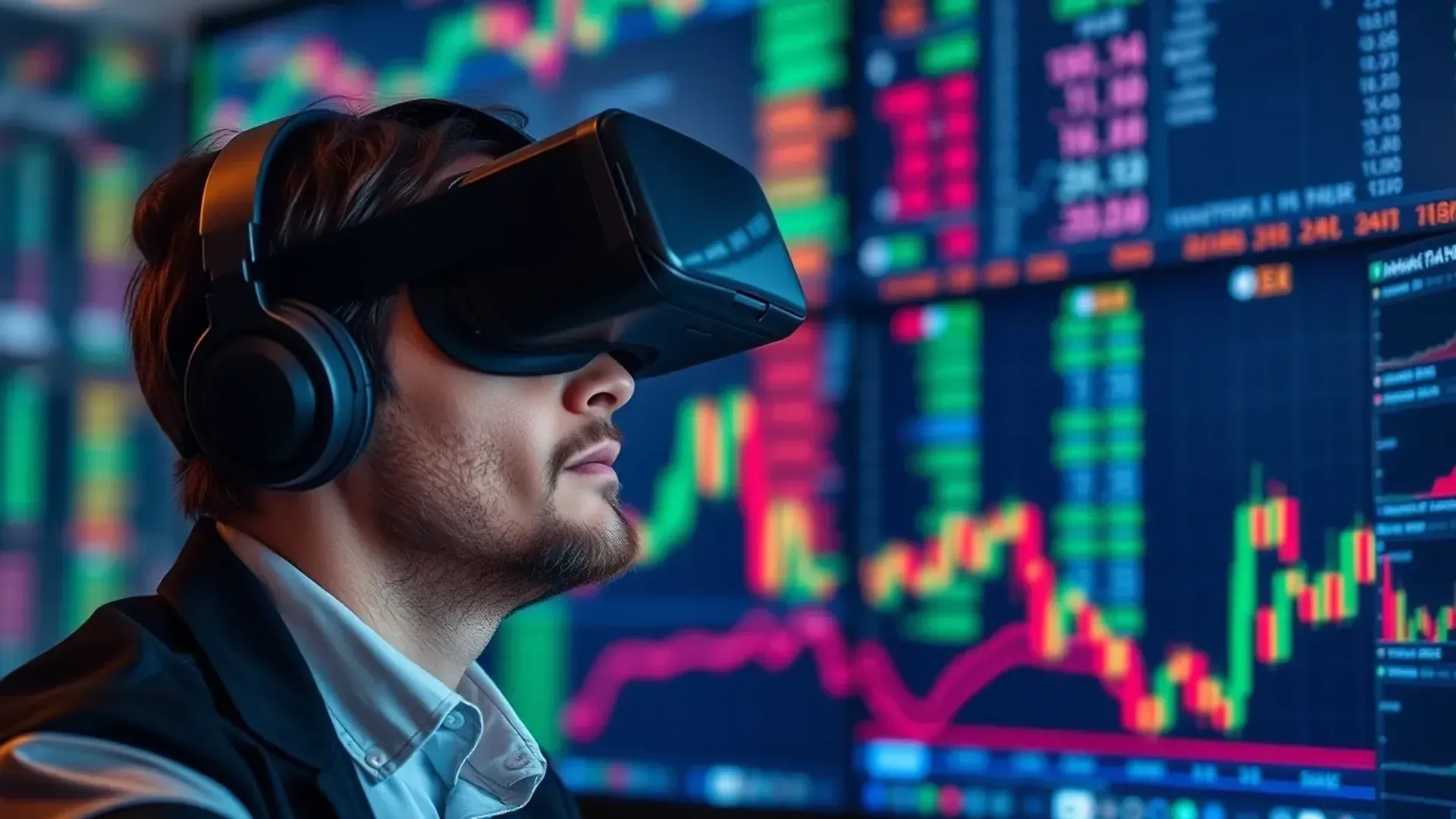
To predict future exchange rate movements in Forex trading, there are several approaches and tools that traders commonly use. These include fundamental analysis, technical analysis, and sentiment analysis. By combining these methods and staying updated on economic indicators, geopolitical events, and market sentiment, traders can make informed predictions about future exchange rate movements.
Understanding Technical Analysis for Predicting Exchange Rate Movements in Forex Trading
How can I predict future Exchange Rate movements in Forex trading?
If you’re new to Forex trading, you may be wondering how experienced traders are able to predict future exchange rate movements. The answer lies in a technique called technical analysis. By analyzing historical price data and using various indicators, traders can make educated guesses about where the market is headed. In this article, we’ll explore the basics of technical analysis and how it can help you predict exchange rate movements.
Technical analysis is based on the belief that historical price data can provide valuable insights into future price movements. Traders use charts to visualize this data and identify patterns that may indicate future trends. One of the most commonly used chart types is the candlestick chart, which displays the opening, closing, high, and low prices for a given time period.
To make sense of the data on a candlestick chart, traders use various indicators and tools. Moving averages, for example, are used to smooth out price fluctuations and identify trends. By calculating the average price over a specific time period, traders can determine whether the market is trending up or down.
Another popular indicator is the Relative Strength Index (RSI), which measures the speed and change of price movements. The RSI ranges from 0 to 100 and is used to identify overbought and oversold conditions. When the RSI is above 70, it suggests that the market is overbought and a reversal may be imminent. Conversely, an RSI below 30 indicates an oversold market and a potential buying opportunity.
In addition to indicators, traders also use support and resistance levels to predict future price movements. Support levels are price levels where buying pressure is expected to outweigh selling pressure, causing prices to bounce back up. Resistance levels, on the other hand, are price levels where selling pressure is expected to outweigh buying pressure, causing prices to reverse.
By identifying these levels on a chart, traders can anticipate potential turning points in the market. For example, if a currency pair has repeatedly bounced off a support level in the past, it’s likely to do so again in the future. This information can be used to enter trades at favorable prices and maximize profits.
It’s important to note that technical analysis is not foolproof. While it can provide valuable insights into market trends, it’s not a crystal ball that can predict future price movements with 100% accuracy. The market is influenced by a wide range of factors, including economic data, geopolitical events, and investor sentiment, which can all impact exchange rates.
That being said, technical analysis can still be a useful tool in your trading arsenal. By combining it with fundamental analysis and staying informed about market news, you can make more informed trading decisions. Remember, no single method can guarantee success in Forex trading, but by using a variety of tools and strategies, you can increase your chances of profitability.
In conclusion, predicting future exchange rate movements in Forex trading is no easy task. However, by using technical analysis techniques such as chart patterns, indicators, and support and resistance levels, traders can gain valuable insights into market trends. While technical analysis is not infallible, it can be a helpful tool when combined with other forms of analysis. So, if you’re looking to improve your trading skills, consider incorporating technical analysis into your strategy.
Using Fundamental Analysis to Predict Future Exchange Rate Movements in Forex Trading
Forex trading can be an exciting and potentially profitable venture, but it’s not without its challenges. One of the biggest challenges for traders is predicting future exchange rate movements. After all, the ability to accurately forecast these movements can make all the difference between a successful trade and a losing one. So, how can you predict future exchange rate movements in Forex trading? One approach is to use fundamental analysis.
Fundamental analysis is a method of predicting future price movements by analyzing economic, social, and political factors that may affect the supply and demand of a currency. It involves studying various indicators and economic data to gain insights into the overall health of an economy and its currency. By understanding these factors, traders can make more informed decisions about when to buy or sell a currency pair.
One of the key indicators used in fundamental analysis is interest rates. Central banks play a crucial role in setting interest rates, and changes in these rates can have a significant impact on a currency’s value. When interest rates rise, it typically attracts foreign investors seeking higher returns, which can lead to an increase in demand for the currency. Conversely, when interest rates fall, it may discourage foreign investors, leading to a decrease in demand for the currency.
Another important factor to consider is economic data, such as GDP growth, inflation rates, and employment figures. Positive economic data can indicate a strong economy and may lead to an increase in the value of the currency. On the other hand, negative economic data can suggest a weak economy and may result in a decrease in the currency’s value. Traders often keep a close eye on economic indicators and news releases to stay informed about the latest developments that could impact exchange rates.
In addition to interest rates and economic data, geopolitical events can also influence exchange rates. Political instability, trade disputes, and other global events can create uncertainty in the markets, leading to volatility in currency prices. Traders who stay informed about these events and their potential impact on exchange rates can position themselves to take advantage of market movements.
It’s important to note that fundamental analysis is just one approach to predicting future exchange rate movements. Another popular method is technical analysis, which involves studying historical price patterns and using mathematical indicators to forecast future price movements. Many traders use a combination of both fundamental and technical analysis to make their trading decisions.
While fundamental analysis can provide valuable insights into future exchange rate movements, it’s important to remember that the Forex market is highly unpredictable. There are many factors at play, and even the most experienced traders can’t accurately predict every market movement. It’s essential to manage risk and use proper risk management techniques to protect your capital.
In conclusion, predicting future exchange rate movements in Forex trading is a challenging task. However, by using fundamental analysis, traders can gain a better understanding of the factors that influence currency prices. By staying informed about interest rates, economic data, and geopolitical events, traders can make more informed decisions and increase their chances of success in the Forex market. Remember, though, that no method is foolproof, and it’s crucial to manage risk and use proper risk management techniques in your trading strategy.
Exploring Sentiment Analysis Techniques for Predicting Exchange Rate Movements in Forex Trading
Have you ever wondered how to predict future exchange rate movements in forex trading? It’s a question that many traders ask themselves, and for good reason. Being able to accurately predict these movements can make a huge difference in your trading success. Fortunately, there are several techniques that can help you do just that, and one of the most effective is sentiment analysis.
Sentiment analysis is a technique that involves analyzing the emotions and opinions of market participants to gauge their overall sentiment towards a particular currency pair. By understanding the sentiment of the market, you can get a better idea of how the exchange rate is likely to move in the future.
So how does sentiment analysis work? Well, it starts by collecting data from various sources, such as news articles, social media posts, and even online forums. These sources can provide valuable insights into the thoughts and feelings of traders and investors, which can then be analyzed to determine their sentiment towards a currency pair.
One way to analyze sentiment is by using natural language processing techniques. This involves using algorithms to analyze the text and identify key words and phrases that indicate positive or negative sentiment. For example, if a news article contains words like “strong” or “positive” when referring to a currency pair, it suggests that the sentiment towards that pair is bullish. On the other hand, if the article contains words like “weak” or “negative,” it suggests a bearish sentiment.
Another technique that can be used for sentiment analysis is social media monitoring. By monitoring social media platforms like Twitter and Facebook, you can get a real-time view of what traders and investors are saying about a particular currency pair. This can be especially useful during major news events or economic releases, as it allows you to see how the market is reacting in real-time.
Once you have collected and analyzed the sentiment data, the next step is to use it to predict future exchange rate movements. This can be done by looking for patterns or correlations between sentiment and price movements. For example, if you notice that positive sentiment tends to precede an upward movement in the exchange rate, you can use this information to make more informed trading decisions.
Of course, it’s important to remember that sentiment analysis is just one tool in your trading arsenal. It should be used in conjunction with other technical and fundamental analysis techniques to get a more complete picture of the market. Additionally, sentiment can be fickle and subject to change, so it’s important to constantly monitor and update your analysis as new information becomes available.
In conclusion, predicting future exchange rate movements in forex trading is no easy task. However, by using sentiment analysis techniques, you can gain valuable insights into the thoughts and feelings of market participants, which can help you make more informed trading decisions. So the next time you’re wondering how to predict future exchange rate movements, consider giving sentiment analysis a try. You might be surprised at the results.
Applying Machine Learning Algorithms for Predicting Future Exchange Rate Movements in Forex Trading
Have you ever wondered how traders are able to predict future exchange rate movements in Forex trading? It seems like an impossible task, but with the help of machine learning algorithms, it is becoming more and more possible. In this article, we will explore how machine learning algorithms can be applied to predict future exchange rate movements in Forex trading.
Forex trading is a complex and volatile market, where currencies are constantly being bought and sold. Traders are always on the lookout for opportunities to make profitable trades, and one way to do this is by predicting future exchange rate movements. Traditionally, traders have relied on technical analysis and fundamental analysis to make these predictions. However, these methods have their limitations and are often based on subjective interpretations of data.
Machine learning algorithms, on the other hand, offer a more objective and data-driven approach to predicting future exchange rate movements. These algorithms are designed to analyze large amounts of historical data and identify patterns and trends that may not be immediately apparent to human traders. By training these algorithms on historical exchange rate data, they can learn to recognize patterns and make predictions based on this knowledge.
There are several machine learning algorithms that can be applied to predict future exchange rate movements. One popular algorithm is the Support Vector Machine (SVM). SVMs are supervised learning models that analyze data and recognize patterns, making them well-suited for predicting future exchange rate movements. Another algorithm that is commonly used is the Random Forest algorithm. This algorithm works by creating a multitude of decision trees and combining their predictions to make a final prediction. Random Forests are known for their accuracy and robustness, making them a popular choice among Forex traders.
To apply these machine learning algorithms to Forex trading, traders need to gather historical exchange rate data and use it to train the algorithms. This data can be obtained from various sources, such as financial websites or Forex trading platforms. Once the algorithms have been trained, they can be used to make predictions on future exchange rate movements. Traders can then use these predictions to inform their trading decisions and potentially make profitable trades.
It is important to note that while machine learning algorithms can be a valuable tool in predicting future exchange rate movements, they are not foolproof. The Forex market is influenced by a wide range of factors, including economic indicators, geopolitical events, and market sentiment. These factors can sometimes cause unexpected fluctuations in exchange rates, which may not be accurately predicted by machine learning algorithms. Therefore, it is always important for traders to exercise caution and use other forms of analysis in conjunction with machine learning predictions.
In conclusion, machine learning algorithms offer a promising approach to predicting future exchange rate movements in Forex trading. By analyzing large amounts of historical data, these algorithms can identify patterns and trends that may not be immediately apparent to human traders. However, it is important to remember that these algorithms are not infallible and should be used in conjunction with other forms of analysis. With the right combination of tools and strategies, traders can increase their chances of making profitable trades in the Forex market.
Conclusion
To predict future exchange rate movements in Forex trading, you can consider the following approaches:
1. Fundamental Analysis: Analyze economic indicators, such as interest rates, inflation rates, GDP growth, and political stability, to assess the overall health of a country’s economy and its impact on the exchange rate.
2. Technical Analysis: Use historical price data, charts, and technical indicators to identify patterns, trends, and support/resistance levels that can help predict future price movements.
3. Sentiment Analysis: Monitor market sentiment, news, and geopolitical events to gauge the market’s perception and expectations, as these factors can influence exchange rates.
4. Carry Trade Strategy: Consider interest rate differentials between two currencies to predict potential currency appreciation or depreciation.
5. Use of Automated Trading Systems: Utilize algorithmic trading systems that employ complex mathematical models and historical data to predict future exchange rate movements.
It is important to note that predicting exchange rate movements accurately is challenging, and no method can guarantee absolute accuracy. Therefore, it is advisable to combine multiple approaches, stay updated with market news, and continuously monitor and adjust your trading strategies.